

Adoption is a profound journey that shapes the lives of birth parents, adoptive families, and children for generations. In Texas, the legal framework surrounding adoption is robust, yet the emotional landscape varies significantly depending on the level of contact chosen. According to recent data from the Texas Department of Family and Protective Services, over 4,000 adoptions were finalized in the state in recent years, with a growing trend toward open arrangements. This shift reflects a broader national movement where transparency is increasingly valued for the psychological well-being of the child. Understanding these distinctions is critical for anyone navigating the complex path to parenthood or placing a child for adoption.
The Texas Legal Framework for Adoption
Before diving into the specific types of adoption, it is essential to understand the legal landscape in Texas. Texas law prioritizes the best interests of the child above all else. However, the state has specific statutes regarding post-adoption contact agreements. In Texas, a Post-Adoption Contact Agreement (PACA) is a legally binding contract between the birth parents and the adoptive parents. This agreement outlines the terms of communication and visitation after the adoption is finalized.
It is important to note that while Texas allows these agreements, they are enforceable only if they are included in the final adoption decree. Without this legal backing, a promise of contact remains a moral commitment rather than a legal obligation. This legal nuance makes the choice between open and closed adoption not just an emotional decision, but a strategic legal one. For more details on the legal requirements, you can review the Texas Family Code which governs these procedures.
Understanding Open Adoption
Open adoption is defined as an arrangement where birth parents and adoptive families maintain some form of direct or indirect contact after the adoption is finalized. This contact can range from exchanging letters and photos to regular phone calls and in-person visits. The level of openness is entirely customizable and agreed upon by both parties before the adoption is finalized.
One of the primary benefits of open adoption is the ability for the child to have access to their medical history and cultural heritage. According to the Child Welfare Information Gateway, children in open adoptions often report a stronger sense of identity and fewer feelings of abandonment. For birth parents, this arrangement can provide peace of mind, knowing their child is thriving and safe.
However, open adoption requires a high degree of communication and boundary-setting. It is not for everyone, as it demands ongoing emotional availability and respect for the adoptive parents' role as the primary caregivers. At Life Tree Adoption, we facilitate these conversations to ensure all parties feel comfortable and secure in their chosen path. You can learn more about our support services for birth parents to understand how we help navigate these relationships.
Understanding Closed Adoption
Closed adoption is defined as an arrangement where no identifying information is shared between the birth family and the adoptive family, and no contact occurs after the adoption is finalized. This type of adoption was more common in the mid-20th century and is still chosen by some families today. The primary motivation for choosing closed adoption is often a desire for privacy, a fresh start, or unresolved emotional trauma that makes contact difficult.
In a closed adoption, all records are typically sealed by the court. This means that access to original birth certificates and adoption files is restricted. According to research published by the American Psychological Association, some adults adopted through closed systems may experience curiosity or grief later in life. However, for many birth parents, the closure provides the necessary emotional space to move forward with their lives.
While closed adoption offers privacy, it can also create barriers for the child in understanding their origins. It is crucial to weigh these long-term implications carefully. If you are considering this path, it is vital to have a clear plan for how you will handle future questions about your child's background. We offer guidance on Texas adoption laws to help you make informed decisions.
The Semi-Open Middle Ground
Many families find that a semi-open adoption strikes the right balance. Semi-open adoption is defined as an arrangement where communication occurs through a third party, such as an adoption agency or attorney, without direct contact between the birth and adoptive families. This method allows for the exchange of updates, photos, and letters while maintaining a layer of privacy.
This approach is particularly popular in Texas because it offers flexibility. Birth parents can receive updates on their child's growth without the pressure of direct interaction. Adoptive parents can share their child's milestones without revealing their home address or personal contact information. This middle ground often reduces anxiety for both parties, as the boundaries are clear and mediated by professionals. (Texas Department of)
Life Tree Adoption specializes in facilitating these semi-open arrangements. We act as the conduit for communication, ensuring that updates are delivered promptly and respectfully. Our services for adoptive families include comprehensive support in establishing and maintaining these healthy boundaries.
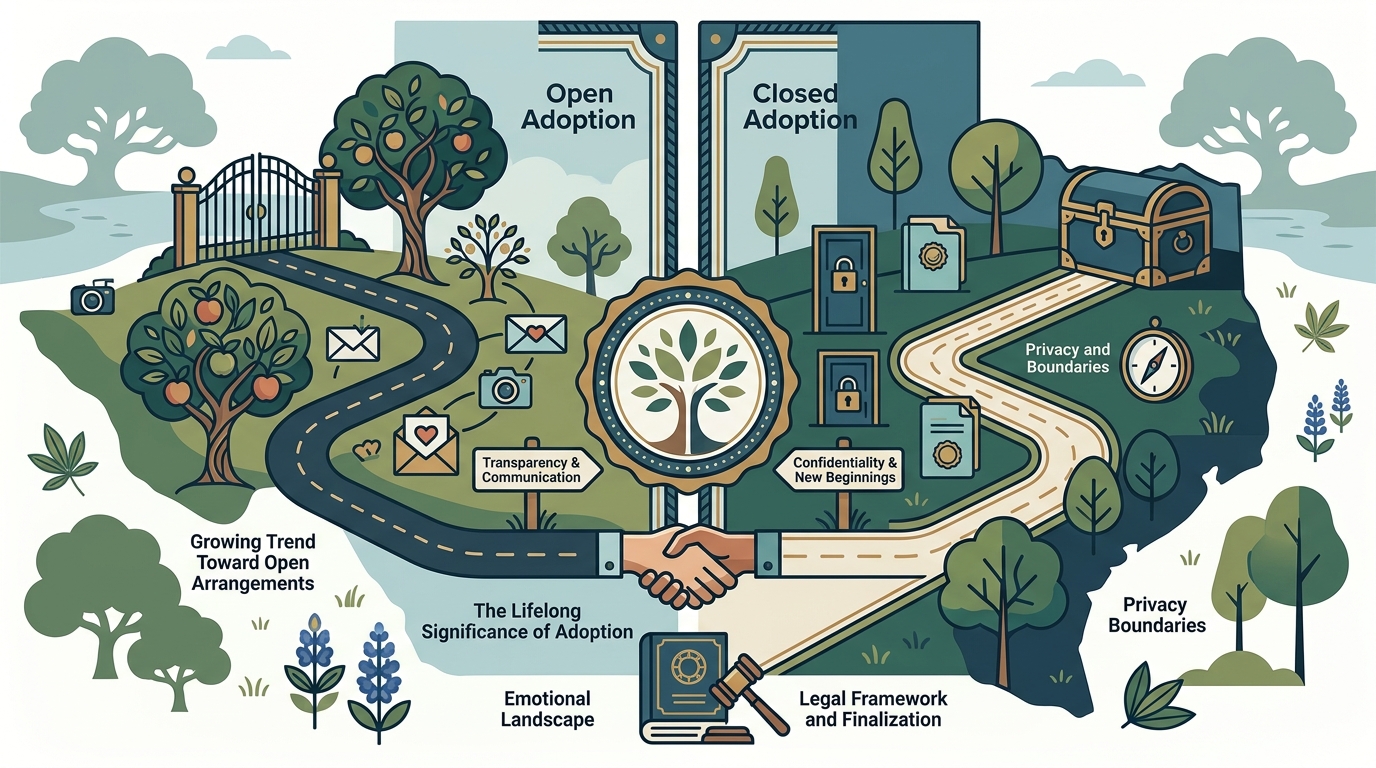
Comparison of Adoption Types
To help you visualize the differences, here is a summary of the key distinctions between open, semi-open, and closed adoptions in Texas.
| Feature | Open Adoption | Semi-Open Adoption | Closed Adoption |
|---|---|---|---|
| Contact Level | Direct (calls, visits) | Indirect (via agency) | None |
| Identifying Info | Shared | Partially Shared | Sealed |
| Legal Agreement | PACA (Enforceable) | Informal or PACA | Records Sealed |
| Privacy | Low | Medium | High |
| Best For | High trust, ongoing connection | Desire for updates, privacy | Need for complete closure |
Key Takeaways
- Legal Enforceability: In Texas, Post-Adoption Contact Agreements are legally binding only if included in the final decree.
- Trend Shift: Open and semi-open adoptions are increasingly common, with over 60% of modern adoptions involving some level of contact.
- Child's Well-being: Access to medical history and origins is a significant benefit of open arrangements.
- Flexibility: Adoption plans are not static; they can be renegotiated as relationships evolve.
- Professional Mediation: Semi-open adoption offers a safe middle ground for families seeking privacy but staying connected.
- Emotional Support: Both birth and adoptive parents benefit from counseling during the planning process.
- Privacy Rights: Closed adoption ensures complete anonymity but may limit future access to information.
Frequently Asked Questions
Can a closed adoption be opened later?
Yes, it is possible to open a closed adoption later in life. Both parties must agree to the exchange of information. Many states, including Texas, have procedures for accessing sealed records if mutual consent is given.
Is a Post-Adoption Contact Agreement enforceable in Texas?
Yes, Texas law allows for enforceable Post-Adoption Contact Agreements. However, the agreement must be approved by the court and included in the final adoption decree to be legally binding.
What is the most common type of adoption in Texas?
Semi-open adoption is currently one of the most common arrangements. It balances the desire for connection with the need for privacy, making it a practical choice for many families.
Can birth parents change their mind after signing an agreement?
Birth parents have the right to revoke their consent within a specific timeframe after the child's birth. Once the revocation period expires and the adoption is finalized, the terms of the agreement generally stand.
How does open adoption affect the child?
Research suggests that children in open adoptions often have a stronger sense of identity and fewer feelings of rejection. They have direct access to their biological family, which can be beneficial for their emotional development.
What if the birth parent wants to end contact?
If a Post-Adoption Contact Agreement is in place, it is legally binding. However, relationships can change. Many agencies, including Life Tree Adoption, help mediate these changes to ensure the child's needs remain the priority.
Are there costs associated with open adoption?
The costs of adoption are generally similar regardless of the type. However, open adoption may involve additional counseling or mediation fees to support the ongoing relationship. These costs are often covered by adoption grants or subsidies.
Next Steps
Choosing between open and closed adoption is a deeply personal decision that requires careful consideration of your emotional needs and legal rights. At Life Tree Adoption, we are committed to guiding you through every step of this journey with compassion and expertise. Whether you are a birth parent considering placement or an adoptive family seeking to build your family, we are here to support you.
Take the first step toward your adoption plan today. Contact our team to schedule a confidential consultation and learn more about how we can help you achieve your goals. Visit our contact page to get started.