

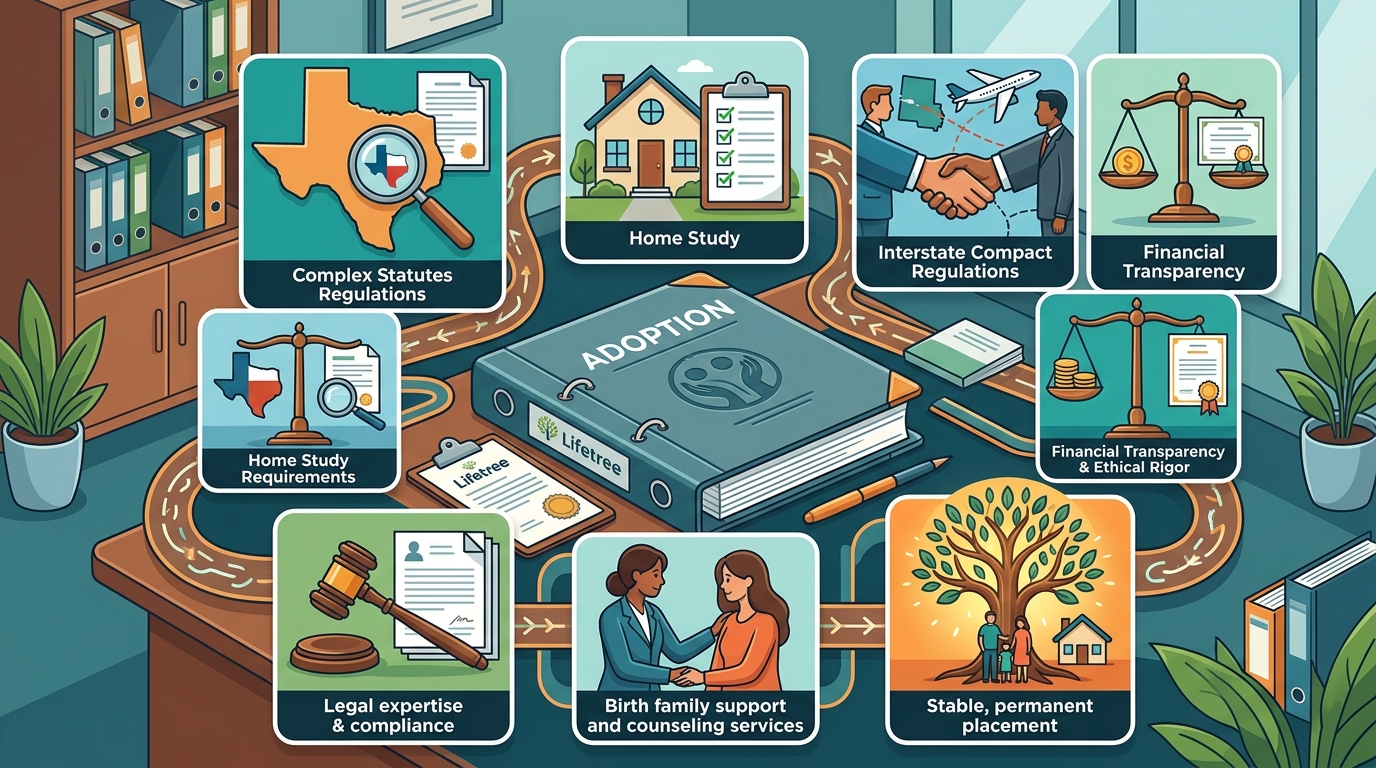
Adoption is one of the most profound journeys a family can undertake, yet the process in Texas involves navigating a complex web of state-specific statutes, home study requirements, and interstate compact regulations. According to the Texas Department of Family and Protective Services, the state consistently ranks among the top five in the nation for both domestic infant and foster-to-adopt placements annually. This high volume of activity means prospective parents have numerous options, but not all agencies operate with the same level of transparency, ethical rigor, or legal expertise. Selecting the wrong partner can lead to emotional burnout, financial waste, and legal complications that delay or derail your family-building goals. This guide outlines the essential criteria for evaluating adoption professionals in the Lone Star State.
Understanding Texas Adoption Laws and Jurisdiction
Texas has distinct legal frameworks that govern how adoptions are finalized, particularly regarding the consent period for birth parents. In Texas, a birth parent cannot legally consent to the adoption until at least 48 hours after the child's birth, excluding weekends and holidays. This waiting period is designed to ensure that consent is given voluntarily and without coercion. Agencies must be well-versed in these timelines to manage expectations accurately.
Furthermore, the concept of consent revocation is critical. While Texas law is generally considered more final regarding consent once given, the window for revocation can vary based on whether the adoption is through a private agency or the Department of Family and Protective Services (DFPS). An agency that fails to explain these nuances clearly may leave you vulnerable to unexpected legal challenges. You must verify that your agency has a robust legal team that specializes exclusively in adoption law, not general family law.
For a deeper understanding of the legal landscape, you can review the Texas Family Code Title 5, which outlines the rights and responsibilities of all parties involved. Additionally, the Texas DFPS adoption portal provides official guidelines on state-regulated procedures.
Evaluating Agency Ethics and Transparency
The adoption industry has historically struggled with ethical lapses, making transparency the most important metric for evaluating any agency. Ethical agencies prioritize the well-being of the birth mother and the child above all else, ensuring that no financial incentives are used to influence a birth parent's decision. This is not just a moral stance; it is a legal requirement under federal and state laws.
When interviewing potential agencies, ask direct questions about their policies on birth parent counseling and support. Do they provide independent legal counsel for birth parents? Do they offer ongoing counseling services? An agency that claims to be "ethical" but cannot provide specific details about their birth parent support protocols should be viewed with skepticism. Transparency is the hallmark of a trustworthy adoption professional.
You can also check the agency's standing with the Council on Accreditation (COA), which sets high standards for adoption service providers. Membership in the National Council For Adoption is another indicator of a commitment to industry best practices.
Home Study Process and Requirements
A home study is a mandatory assessment that evaluates your readiness to adopt. In Texas, this process must be conducted by a licensed agency or a licensed child-placing agency. The home study includes background checks, financial statements, medical reports, and personal references. It also involves several in-home visits and interviews to assess your living environment and parenting philosophy.
The duration of a home study can vary significantly. Some agencies complete the process in six to eight weeks, while others may take three to four months depending on their workload and your responsiveness. It is crucial to choose an agency that provides a clear timeline and checklist for the home study process. Delays in home study completion are one of the most common bottlenecks in the adoption journey.
According to data from the Child Welfare Information Gateway, families who complete their home studies early and maintain open communication with their agency often experience smoother placement processes. Ensure your agency offers pre-adoption training that covers topics such as attachment, trauma-informed care, and cultural competency.
Financial Clarity and Cost Structures
Adoption costs in Texas can range from $20,000 to $50,000 or more, depending on the type of adoption (domestic infant, foster, or international) and the services provided. Ethical agencies provide a detailed, itemized cost estimate upfront. They should clearly distinguish between agency fees, legal fees, and birth parent living expenses.
Be wary of agencies that offer vague cost estimates or pressure you to commit funds before providing a full breakdown. Texas law allows for the payment of certain birth parent expenses, including medical costs not covered by insurance, legal fees, and reasonable living expenses during pregnancy. However, these payments must be carefully documented and approved by the court to ensure they are not construed as inducement for adoption.
Many families utilize adoption loans or grants to manage these costs. Organizations like Adoption Grants and Campaign for Adoption provide financial assistance to eligible families. A reputable agency will often have a financial counselor who can guide you through these resources.
Post-Adoption Support Services
The adoption journey does not end at placement. Post-adoption support is essential for helping your family adjust to new dynamics and addressing any challenges that may arise. Look for agencies that offer ongoing counseling, support groups, and educational resources for adoptive families.
Birth parent relationships also require careful management. Many agencies facilitate open or semi-open adoption arrangements, which involve ongoing communication between the adoptive family and the birth family. The agency should provide mediation services and guidance on maintaining healthy boundaries and communication channels.
Research from the U.S. Department of Health and Human Services highlights that post-adoption support significantly improves long-term outcomes for children and families. Ensure your agency has a dedicated post-adoption department that remains accessible for years after the finalization.
Interstate Compact and Placement Logistics
If you are adopting a child from another state, the Interstate Compact on the Placement of Children (ICPC) applies. This agreement ensures that children placed across state lines receive appropriate care and that adoptive parents meet the legal requirements of both states. The ICPC process can add weeks or even months to the adoption timeline.
Your agency must have experience navigating ICPC regulations and should be able to explain the process clearly. They should coordinate with counterpart agencies in the child's birth state to ensure all paperwork is completed accurately and submitted promptly. Delays in ICPC approval are common and can be stressful for families waiting to bring their child home.
For detailed information on ICPC requirements, refer to the Interstate Compact on the Placement of Children official website. Understanding these logistics is critical for managing your expectations and preparing for potential delays.
Comparing Agency Options
When comparing adoption agencies in Texas, consider the following factors in a structured manner. The table below summarizes key differences between common agency types.
| Agency Type | Primary Focus | Typical Cost Range | Best For |
|---|---|---|---|
| Non-Profit Private Agency | Domestic Infant Adoption | $25,000 - $45,000 | Families seeking open adoption and birth parent support |
| For-Profit Agency | Domestic Infant Adoption | $30,000 - $50,000 | Families wanting extensive marketing and rapid placement |
| DFPS Foster Care | Foster-to-Adopt | $0 - $2,000 | Families willing to adopt older children or siblings |
| Independent Attorney | Direct Placement | $15,000 - $30,000 | Families with their own birth parent connection |
At Life Tree Adoption, we specialize in guiding families through the domestic infant adoption process with a focus on ethical practices and comprehensive support. Our team is dedicated to helping you navigate the complexities of Texas adoption law with confidence and clarity. Visit our services page to learn more about our specific offerings.
Key Takeaways
- Legal Expertise: Ensure your agency has a specialized legal team familiar with Texas Family Code Title 5 and ICPC regulations.
- Ethical Standards: Verify the agency's commitment to ethical practices through COA accreditation and transparent birth parent support policies.
- Financial Clarity: Request a detailed, itemized cost estimate and understand which birth parent expenses are legally permissible in Texas.
- Home Study Efficiency: Choose an agency that can complete your home study promptly and provide clear timelines and checklists.
- Post-Adoption Support: Confirm that the agency offers ongoing counseling and support for both your family and the birth family.
- ICPC Experience: If adopting from another state, verify the agency's experience with interstate compact logistics to avoid delays.
- Transparency: Prioritize agencies that communicate openly about risks, timelines, and potential challenges throughout the process.
Frequently Asked Questions
How long does the adoption process take in Texas?
The timeline varies significantly depending on the type of adoption and the agency's matching process. Domestic infant adoptions typically take 6 to 12 months from application to placement, while foster-to-adopt adoptions can take 1 to 2 years or longer. Legal finalization usually occurs 6 to 12 months after placement.
What are the legal requirements for home studies in Texas?
Texas requires a home study conducted by a licensed agency or licensed child-placing agency. This includes background checks, financial verification, medical reports, and in-home visits. The home study must be updated annually until the adoption is finalized.
Can I pay for birth parent expenses in Texas?
Yes, Texas law allows adoptive parents to pay for certain birth parent expenses, including medical costs, legal fees, and reasonable living expenses during pregnancy. These payments must be documented and approved by the court to ensure they are not considered inducement for adoption.
What is the Interstate Compact on the Placement of Children (ICPC)?
ICPC is a legal agreement between all 50 states that governs the placement of children across state lines. It ensures that children placed in another state receive appropriate care and that adoptive parents meet the legal requirements of both states. The process can add weeks or months to the adoption timeline.
How do I choose between a non-profit and for-profit adoption agency?
Both types of agencies can be ethical and effective. Non-profits often have lower fees and a strong focus on birth parent support, while for-profits may offer more extensive marketing and faster placement times. Evaluate each agency based on their ethical standards, transparency, and fit for your family's needs.
What post-adoption support is available?
Reputable agencies offer ongoing counseling, support groups, and educational resources for adoptive families. This support helps families navigate attachment, trauma, and other challenges that may arise after placement. Some agencies also provide mediation services for maintaining relationships with birth families.
Is it possible to adopt a child from another state?
Yes, many families adopt children from other states. This process involves the ICPC and requires coordination between agencies in both states. It is crucial to work with an agency that has experience with interstate adoptions to ensure a smooth process.
Start Your Adoption Journey with Confidence
Choosing the right adoption agency is a decision that will impact your family for years to come. By prioritizing ethical practices, legal expertise, and transparent communication, you can navigate the Texas adoption process with confidence and peace of mind. Life Tree Adoption is here to support you every step of the way. Contact us today to schedule a consultation and learn more about how we can help you build your family. Visit our contact page to get started.