

Adoption is a life-altering journey that connects birth parents, adoptive families, and children in profound ways. In Texas, the legal framework supports various adoption arrangements, but the choice between open and closed adoption remains one of the most significant decisions for all parties involved. According to recent industry data, over 60% of domestic infant adoptions in the United States now involve some degree of openness, reflecting a major shift in how families connect. Understanding these differences is crucial for navigating the process with clarity and confidence. (Contact Lifetree Adoption Agency)
What is Open Adoption?
Open adoption is a arrangement where birth parents and adoptive families maintain some form of direct contact. This contact can range from exchanging letters and emails to regular phone calls, video chats, or in-person visits. The level of openness is entirely customizable and agreed upon by both parties before the placement occurs.
At Lifetree Adoption Agency, we recognize that open adoption allows birth parents to have peace of mind knowing exactly who is raising their child. It provides the child with access to their medical history and cultural background, which can be vital for their identity development. This model is built on mutual respect and clear communication boundaries.
Types of Openness
Openness exists on a spectrum. Some families choose semi-open adoption, where communication is mediated through the agency to protect privacy. Others opt for fully open adoption, where direct contact is maintained without intermediaries. The key is that the birth parent has a voice in the ongoing relationship.
What is Closed Adoption?
Closed adoption, also known as confidential or sealed adoption, is a process where no identifying information is shared between the birth parents and the adoptive family. All records are typically sealed by the court, and there is no direct contact after the placement. This model was more common in previous decades and is still chosen by those who prioritize privacy and a fresh start.
For some birth parents, a closed adoption provides the emotional space needed to move forward without the complexity of ongoing contact. It eliminates the potential for confusion or boundary issues that can sometimes arise in open arrangements. However, it also means the child may have limited access to their biological origins.
Key Differences Between Open and Closed Adoption
Understanding the core distinctions helps families make an informed decision. The primary difference lies in the flow of information and the nature of the relationship post-placement.
| Feature | Open Adoption | Closed Adoption |
|---|---|---|
| Contact Level | Direct or mediated contact is maintained. | No contact or identifying information is shared. |
| Privacy | Lower privacy; shared life updates. | High privacy; complete separation of lives. |
| Child's Identity | Access to biological roots and medical history. | Records are sealed; identity may be less clear. |
| Flexibility | Highly customizable agreements. | Fixed; no ongoing negotiation required. |
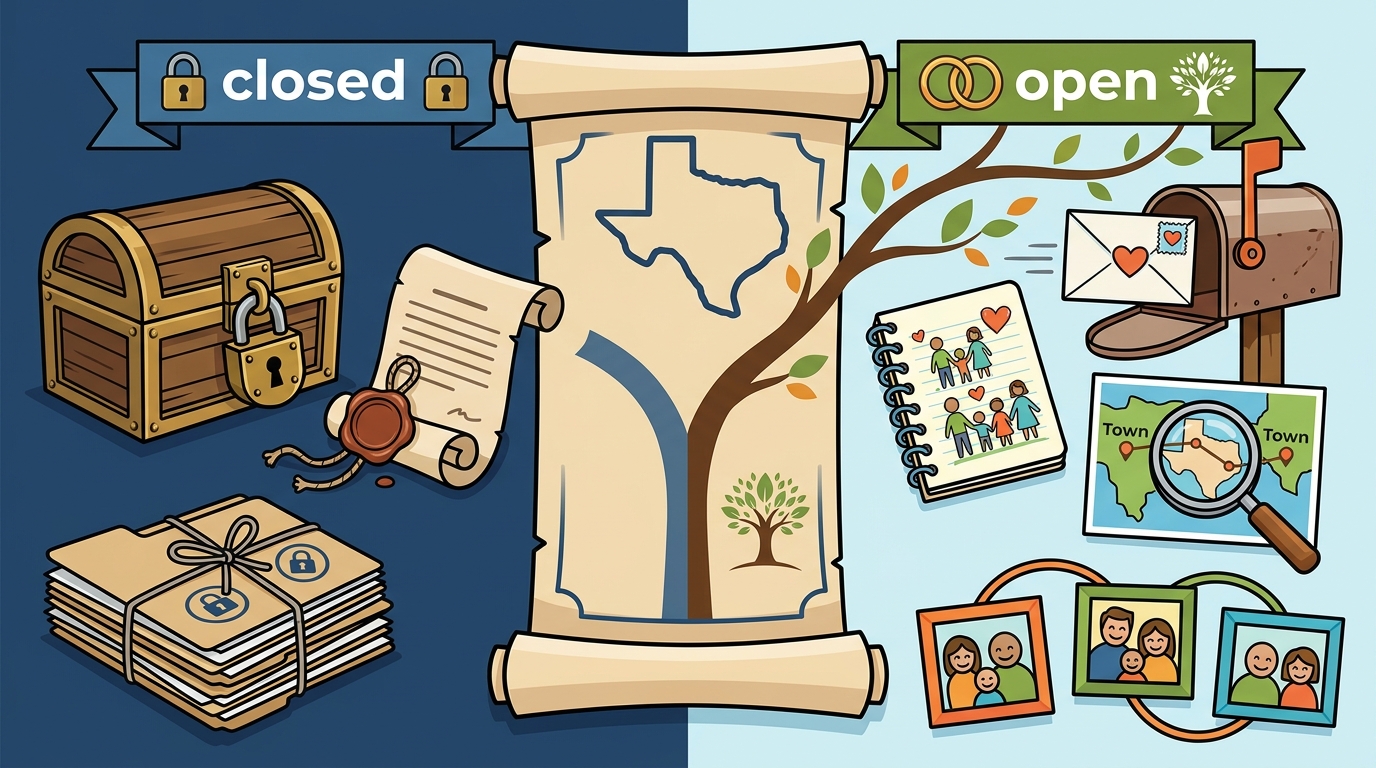
Texas Adoption Law and Contact Agreements
Texas law provides a unique landscape for adoption agreements. While open adoption is widely practiced, it is important to understand the legal standing of contact agreements. In Texas, a post-placement contact agreement is a voluntary contract between the birth parents and adoptive parents. It outlines the terms of ongoing contact, such as visits or updates.
However, these agreements are not always legally enforceable in the same way as a custody order. If circumstances change, the court's primary concern is the best interest of the child. This is why working with a licensed agency like Lifetree Adoption Agency is critical. We help facilitate these conversations and ensure that all parties understand the expectations and the emotional weight of the agreement.
Legal Protections
Texas Family Code Section 162.012 allows for the enforcement of contact agreements under specific conditions. The agreement must be in writing, signed by both parties, and approved by the court. It must also be deemed in the best interest of the child at the time of enforcement. This legal nuance highlights the importance of clear, compassionate communication from the start.
Pros and Cons of Each Model
Choosing between open and closed adoption is deeply personal. There is no right or wrong answer, only what feels right for your specific situation.
Benefits of Open Adoption
- For Birth Parents: Reduced anxiety about the child's well-being. You can see your child thrive and grow.
- For Adoptive Parents: Direct access to medical history and the ability to answer the child's questions honestly.
- For the Child: A stronger sense of identity and no feelings of abandonment.
Benefits of Closed Adoption
- For Birth Parents: Complete privacy and the ability to start a new chapter without ongoing reminders.
- For Adoptive Parents: Full parental authority without external input or boundary negotiations.
- For the Child: A clear, unambiguous family unit without potential loyalty conflicts.
Key Takeaways
- Open adoption allows for ongoing contact, while closed adoption maintains strict privacy.
- Texas law supports voluntary contact agreements, but they are subject to the best interest of the child standard.
- Over 60% of modern adoptions involve some level of openness, reflecting a cultural shift.
- Lifetree Adoption Agency serves families across Texas, including Dallas, Fort Worth, and Denton.
- The choice depends on the comfort levels and needs of the birth parents and adoptive families.
- Professional guidance is essential for navigating legal and emotional complexities.
- Both models can result in healthy, loving families when handled with care.
Frequently Asked Questions
Can I change my mind about open adoption after placement?
While you can discuss changes with the adoptive family, the legal enforceability of contact agreements in Texas depends on the court's determination of the child's best interest. Open communication is key to maintaining a healthy relationship.
Is closed adoption still common in Texas?
While less common than in the past, closed adoption is still an option for those who prefer privacy. It is often chosen by birth parents who need a clean break or by families seeking a traditional adoption experience.
How does Lifetree Adoption Agency support open adoption?
We facilitate mediated communication, help draft contact agreements, and provide counseling to ensure all parties feel comfortable and respected throughout the process.
What if I want a fully open adoption?
Fully open adoption is possible if both parties agree. We help connect you with waiting families who are open to this level of involvement and support the establishment of clear boundaries.
Are there costs associated with open adoption?
The costs of adoption are generally similar regardless of the level of openness. However, open adoption may involve additional counseling or mediation services to maintain the relationship, which can be covered by adoption assistance programs.
Can I choose the adoptive family for my child?
Yes, in an open or semi-open adoption, you typically have the choice to review profiles of waiting families and select the ones that align with your values and preferences.
Start Your Adoption Journey Today
Whether you are considering open or closed adoption, you do not have to navigate this path alone. Lifetree Adoption Agency is here to provide compassionate, faith-based support every step of the way. We serve families across Texas, from Dallas to the Hill Country, helping to create forever homes filled with love.
Contact us today to learn more about our services and how we can help you. Call or text (972) 491-3333 or visit our contact page to schedule a consultation.